
What is Debian?
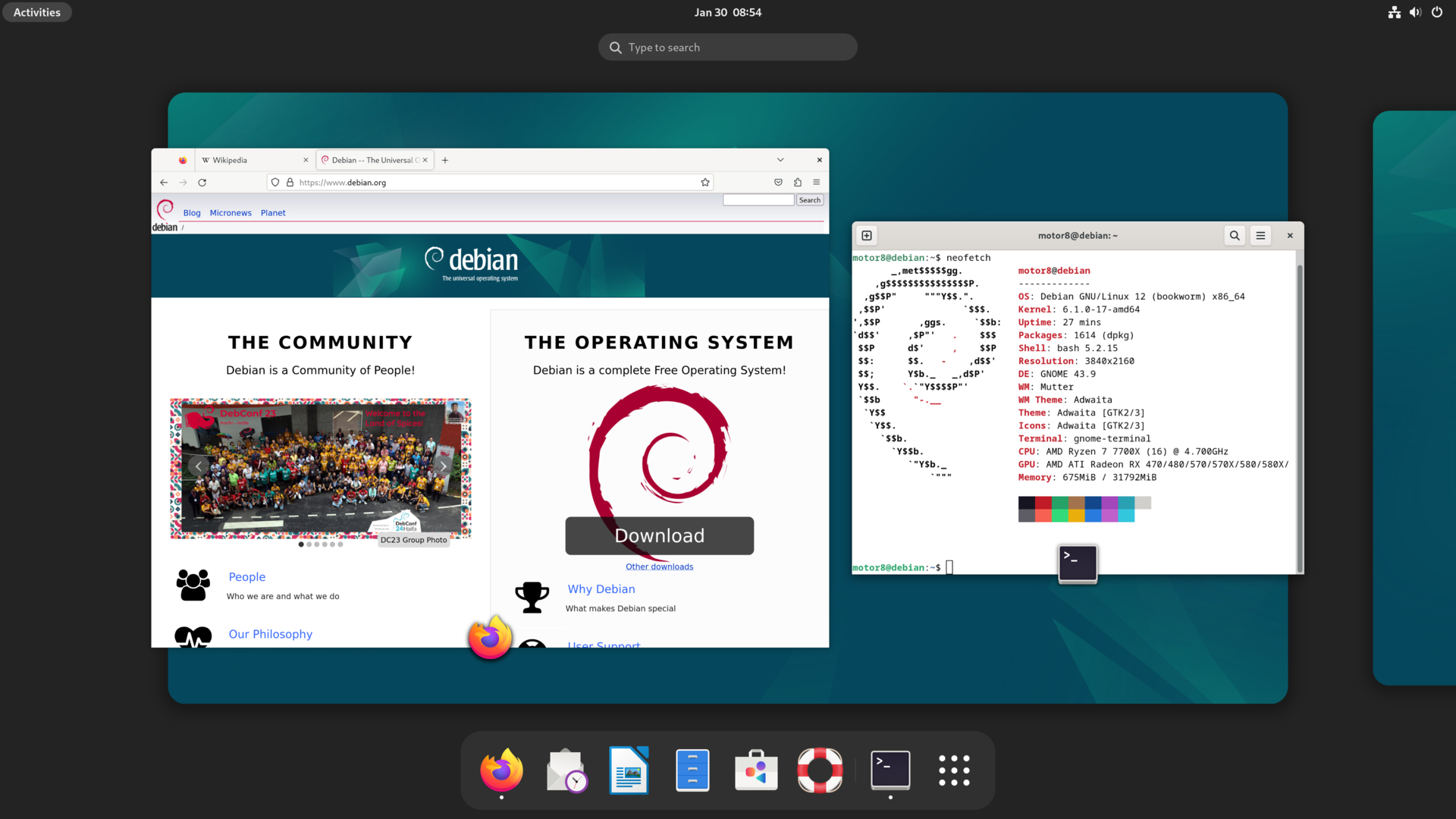
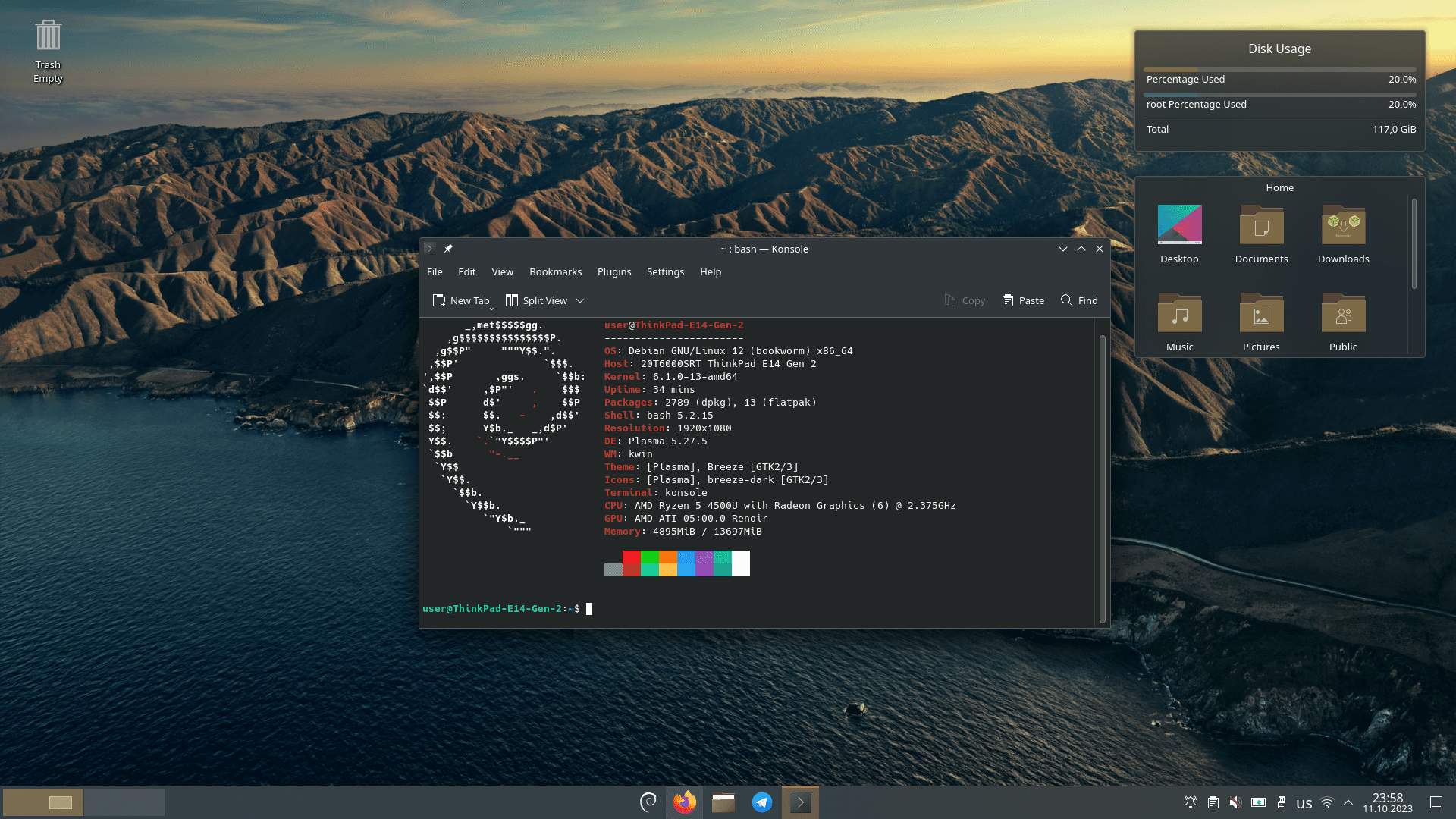
Debian is an important and highly influential operating system built on the principles of stability and freedom. Unlike a rolling-release system (like Arch Linux), Debian uses a distinct, slow moving release cycle, with new Stable versions published every few years. Before a package is included in the Stable release, it undergoes extensive testing in the Testing and Unstable branches, ensuring maximum reliability. This intensive testing process has made Debian a important part of the Linux world, serving as the base for many other popular distributions, including Ubuntu, and its derivatives (e.g Linux Mint). It is developed entirely by a community of volunteers and is governed by its Social Contract, a document that guarantees the system will always remain 100% free software.
Why would I want to use Debian?
You should use Debian if you want reliability. It is one of the standard distros for servers and critical workstations where you need a "set it and forget it" system that runs perfectly for years with minimal intervention. Its software repositories are among the largest available, containing tens of thousands of well tested packages, ensuring you can find almost any application you need. Debian also has great older hardware support, supporting modern 64-bit machines, and even older 32-bit computers, making it perfect for giving new life to old devices. If you value a community-driven project with a strong ethical commitment to software freedom over having the latest features, Debian is a great choice.
Is Debain the most stable Linux distro?
Yeah, pretty much. Debian Stable is widely regarded as one of the most stable Linux distributions, but it's important to understand what "stability" means in this context. Here, stability refers to the fact that the software versions are unchanging. Once a version of Debian is released, the applications and components within it are effectively frozen in time, receiving only critical security patches and major bug fixes. They do not get new feature updates. This prevents unexpected changes and ensures that custom configurations don't break over the system's multi-year lifespan. The trade-off for this unparalleled predictability is that the software is older than what you'd find on other distributions. If your definition of stability is a dependable, consistent, and thoroughly tested platform, then Debian is at the top of its class.